Packaging Ideas for Small Batch Food Brands
TLDR
Small batch food packaging should feel clean, practical, and personal without becoming expensive or overbuilt.
Start with simple containers, clear labels, and a consistent brand system across flavors or product lines.
Use custom labels for jars, bottles, bags, and boxes. Use custom stickers for seals, thank-you extras, sampler packs, seasonal drops, and market booth branding.
Before printing packaging, make sure your required food label information is correct for your product and location.
Introduction
Small batch food brands live in the details. A jar of jam, a pouch of granola, a bottle of hot sauce, or a box of cookies can look thoughtful before anyone tastes it. That first impression comes from the packaging.
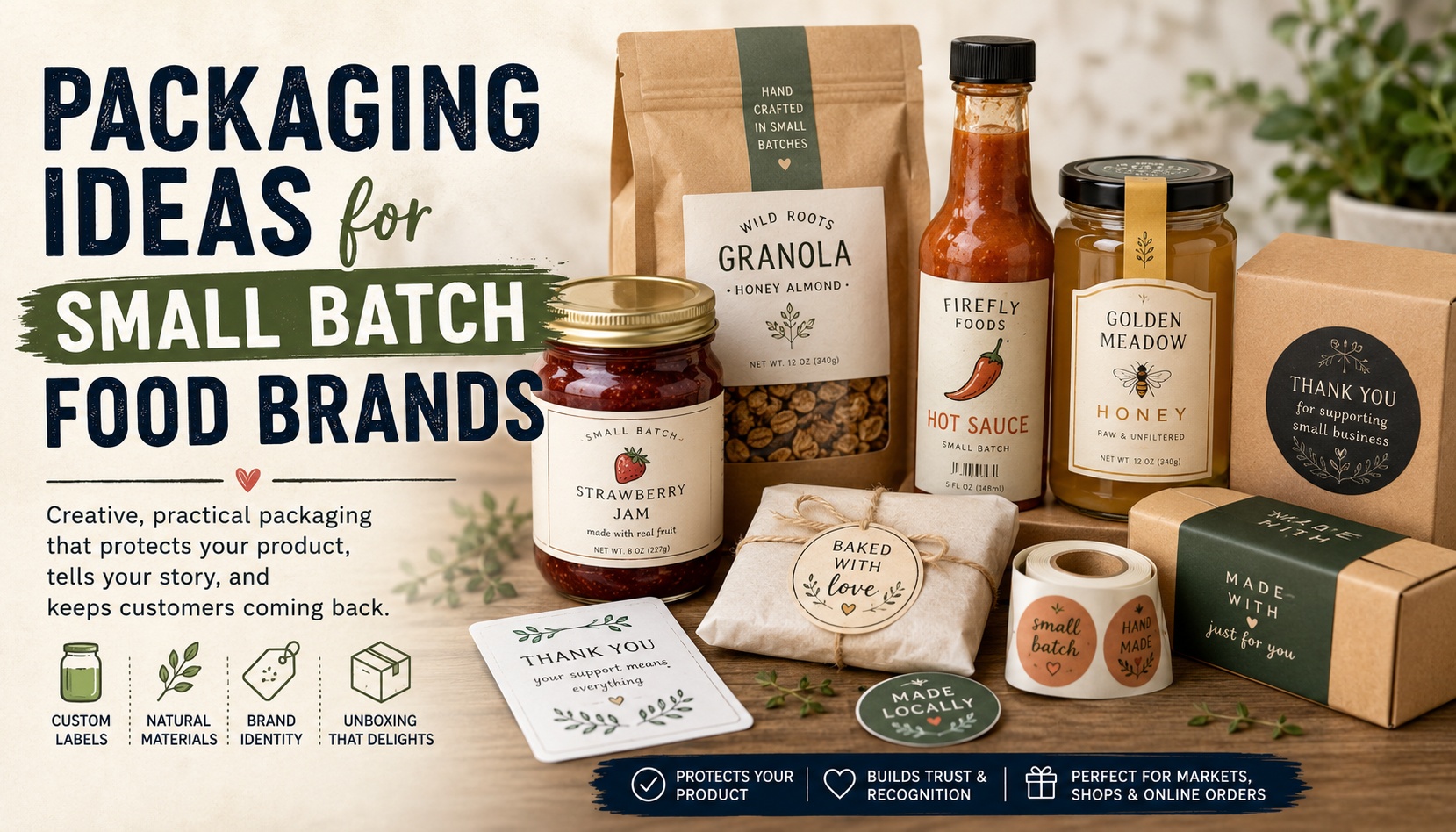
Good packaging ideas for small batch food brands do not need to be complicated. In fact, the best setups are usually simple: a good container, a clear label, a repeatable layout, and one or two small touches that make the product feel like it came from a real maker.
That matters when you sell at farmers markets, local shops, pop-ups, subscription boxes, or online. A customer may not know your recipe yet. They are judging what they can see: the name, the label, the ingredient clarity, the packaging quality, and whether the product feels giftable or trustworthy.
Packaging should do three jobs at once. It should protect the food, explain the product, and support the brand. Miss one of those and the whole thing feels off.
Start With the Container, Not the Label
The container decides a lot. It affects the label size, the customer experience, the shelf presence, the shipping setup, and the cost per unit.
A small batch brand does not always need custom boxes or fully printed packaging right away. Those can be great later, but they usually require more planning, higher minimums, and more storage space. In the early stage, stock containers with strong custom labels are often the better move.
Common food packaging formats include:
- Glass jars for jam, honey, sauces, pickles, spice blends, and nut butters
- Plastic jars for dry mixes, candies, snacks, and lightweight products
- Stand-up pouches for granola, coffee, tea, trail mix, cookies, and pet treats
- Tin tie bags for coffee, baked goods, and loose-leaf tea
- Bottles for hot sauce, syrups, cold brew, dressings, and beverages
- Bakery boxes for cookies, pastries, cupcakes, and gift sets
- Kraft boxes for snack bundles, sweets, and sampler packs
The goal is not to pick the fanciest container. The goal is to pick the container that makes the product easy to sell, store, ship, and use.
A beautiful glass jar is great for a premium jam at a local market. It may be less great if you ship nationwide and breakage becomes a regular problem. A stand-up pouch may not feel as “special” at first, but it can be lighter, easier to store, and more practical for dry goods.
Packaging is full of those tradeoffs.
Use Labels to Make Stock Packaging Feel Custom
Labels are one of the best tools for small batch food brands because they let you turn basic packaging into branded packaging without ordering custom-printed jars, bags, or boxes.
A clean front label can carry the product name, flavor, logo, and visual style. A back label can handle ingredients, net weight, business information, barcode, storage notes, or required warnings. A lid label or seal can add a finished touch.
For jars, bottles, boxes, and bags, custom product labels are usually the most practical place to start. Roll labels are especially useful when you are applying the same label to dozens or hundreds of products because they are easier to store and apply repeatedly.
Here are a few useful label placements:
- Front label: product name, flavor, logo, key visual
- Back label: ingredients, nutrition details, barcode, storage instructions
- Lid label: flavor marker, batch detail, brand icon
- Neck label: small bottle branding or flavor strip
- Bottom label: production date, batch code, or internal tracking
- Seal label: tamper-evident style closure or decorative closure
You do not need every label type on every product. Too many labels can make small packaging feel crowded. But one strong main label plus a small supporting sticker can do a lot.
Packaging Ideas for Small Batch Food Brands by Product Type
Different food products need different packaging logic. A hot sauce brand does not need the same setup as a cookie company or spice maker.
Jams, Honey, Pickles, and Sauces
Jars are great for products that people expect to see, scoop, pour, or gift. They also give you several branding surfaces: the front, lid, side, and sometimes the back.
For jars, circle labels work well on lids, while rectangle or oval labels usually work better on the front. A lid label can include the flavor name or a small brand mark. The front label can do the heavy lifting.
For example, a small batch jam brand might use:
- A rectangle front label with the brand name and flavor
- A small circle lid label with the fruit illustration
- A back label with ingredients, net weight, and storage notes
If the product may face moisture, refrigeration, or sticky handling, choose a label material and finish that can handle it. A jam jar pulled in and out of the fridge is not the same environment as a dry cookie box.
Hot Sauce, Syrups, Dressings, and Bottled Drinks
Bottles need labels that fit curved surfaces cleanly. This is where label size matters a lot.
A label that is too wide may wrinkle or lift at the edges. A label that is too tall may run into the shoulder or curve of the bottle. For a cleaner look, measure the flat label panel before designing.
A good bottle setup might include:
- A vertical rectangle label for hot sauce
- A wraparound label for syrup
- A clear label for a clean glass bottle look
- A neck label for premium presentation
- A small batch sticker on the back with batch number or production date
Clear labels can look especially nice on glass bottles when you want the color of the sauce, syrup, or drink to show through. For that kind of clean look, clear roll labels can make the packaging feel less bulky.
But clear labels need contrast. White or pale text may disappear on light liquids. Dark text may disappear on dark sauces. Always test the label against the actual bottle and product color.
Coffee, Tea, Granola, and Dry Goods
Dry goods often work well in pouches, tin tie bags, or simple boxes. These formats are flexible, lightweight, and easier to ship than glass.
For coffee and tea, labels can help you avoid printing a different bag for every roast or blend. Use one standard bag and change the label for each product.
A simple system might include:
- One consistent bag color
- One main brand label
- A smaller roast, flavor, or blend sticker
- A back label with brewing notes or ingredients
- A QR code that leads to recipes, sourcing details, or reorder information
This setup is especially useful for small batches because it lets you add seasonal flavors without redesigning the entire package.
Cookies, Candy, and Baked Goods
Bakery packaging is often about charm and clarity. People want to know what is inside, but they also want it to feel giftable.
Window boxes, clear bags, kraft boxes, and bakery sleeves all work well. A sticker can seal the package, carry the brand, or label the flavor.
For small baked goods, circle roll labels are useful for box tops, bag seals, and flavor stickers. They are simple, familiar, and easy to apply.
Good baked goods packaging ideas include:
- A branded sticker sealing tissue paper
- A round label on a cookie box
- A flavor sticker on each bag
- A thank-you sticker inside the order
- A small “baked on” or “best by” label
- Seasonal stickers for holiday boxes
Baked goods often benefit from warmth and personality. But keep the required product information easy to find. Cute packaging should not make customers hunt for allergens or storage instructions.
Build a Simple Label System
A label system is a repeatable design structure. It keeps your packaging consistent across products, even when the flavor, size, or format changes.
This is useful for small batch brands because you may sell multiple products in small runs. You might have three jam flavors, two hot sauces, a seasonal cookie box, and a holiday gift set. Without a system, everything starts looking unrelated.
A simple label system includes:
- The same logo placement
- The same typography
- A consistent product name area
- A repeatable flavor color or icon
- A standard place for net weight
- A standard place for ingredients or supporting details
- A consistent finish, such as matte or gloss
This makes your table, shelf, or online shop look organized. It also helps repeat customers recognize your products faster.
You do not need a huge brand guide. Even a one-page set of rules can help.
For example:
- Logo always at the top
- Product name centered
- Flavor color changes by product
- Ingredients always on the back
- Matte finish on every label
- Circle lid stickers use the same border style
That is enough to create a real system.
Choose Matte, Gloss, or Clear Based on the Product
The finish affects how the packaging feels.
Matte labels have a softer, lower-glare look. They work well for handmade, organic, natural, minimalist, and giftable food brands. Matte can also make small text easier to read under bright market lights.
Gloss labels have more shine. They can make colors look brighter and work well for hot sauce, candy, drinks, snacks, and bold flavor brands.
Clear labels are useful when the package or product color is part of the design. They can look clean on glass jars and bottles, especially when paired with simple typography.
A few practical finish ideas:
- Use matte for granola, tea, honey, spices, cookies, and natural food products.
- Use gloss for hot sauce, candy, beverages, and colorful snack brands.
- Use clear labels for glass bottles, jars, and products where the food color sells the product.
- Use a small sticker seal when you want simple packaging to feel more finished.
For brands that want a softer packaging look, matte label rolls are a good fit for jars, pouches, boxes, and market-ready products.
Add Stickers as Low-Cost Brand Touches
Labels identify the product. Stickers can add personality.
That distinction matters. Your product label needs to be clear and practical. Your sticker can be more playful, seasonal, or promotional.
Small batch food brands can use stickers for:
- Thank-you inserts
- Market giveaways
- Loyalty rewards
- Package seals
- Seasonal drops
- Limited-edition flavors
- Gift boxes
- Sampler packs
- “Made locally” callouts
- QR code promos
- Social handle reminders
For example, a hot sauce brand could include a die cut pepper sticker in every online order. A bakery could seal each box with a branded sticker. A granola brand could add a “small batch” sticker to seasonal flavors.
If the sticker is meant to be kept by the customer, use durable custom stickers instead of a standard packaging label. A sticker people put on a water bottle, laptop, cooler, or notebook has a different job than a label on a jar.
That extra sticker can also turn customers into small-scale brand ambassadors. Not in a forced way. Just in the normal way people use stickers they like.
Make Small Batch Packaging Feel Personal
Small batch food has an advantage that large brands often struggle to fake: it can feel personal.
You can lean into that without making packaging messy or homemade in the wrong way.
Good personal touches include:
- Batch numbers
- Small maker notes
- Flavor story cards
- Recipe cards
- Pairing suggestions
- “Packed by” initials
- Seasonal stickers
- Hand-applied seals
- Local ingredient callouts
- Short thank-you cards
The key is restraint. One personal detail feels thoughtful. Six personal details can feel cluttered.
A spice company might include a small recipe card. A jam maker might add a seasonal note about the fruit. A coffee roaster might include roast date and tasting notes. A cookie brand might use a sticker that says “baked this week” or “made in small batches.”
These touches work because they answer a quiet customer question: why should I buy this instead of the grocery store version?
Think About Shelf, Market, and Shipping
Packaging needs to work in the real places where people see and receive it.
At a farmers market, packaging needs to read from a few feet away. Product names should be large. Flavor should be easy to spot. Price signs and packaging should not fight each other.
On a retail shelf, packaging needs consistency. If a shop carries four of your products, they should look like they belong together.
For shipping, packaging needs protection. Glass jars need padding. Pouches need protection from crushing. Labels should not scuff easily in transit. Stickers used as seals should stay flat and clean.
Ask these questions before finalizing packaging:
- Will the product stand upright?
- Can customers tell what it is quickly?
- Is the flavor easy to find?
- Does the packaging survive transport?
- Does the label stay readable after handling?
- Can I apply this label quickly in batches?
- Is the cost per unit realistic?
- Does this packaging still work if I make 300 units instead of 30?
That last question matters. Small batch brands often grow in awkward steps. Packaging that works for 20 units may become painful at 200.
Do Not Treat Food Labeling as Decoration
Food packaging has rules. The design matters, but required information matters more.
In the United States, the FDA says food sold in the U.S. must be safe, wholesome, and properly labeled. The FDA also notes that most foods are required to bear nutrition labeling unless they qualify for an exemption. Some small businesses may qualify for nutrition labeling exemptions, but those exemptions depend on factors such as sales volume, employee count, and whether nutrition claims are made.
That does not mean every small food brand has the same label requirements. Cottage food laws, state rules, product type, claims, allergens, nutrition facts, and sales channel can all affect what belongs on the package.
At minimum, many food labels need some combination of:
- Product name or statement of identity
- Net quantity
- Ingredient list
- Allergen information
- Business name and address
- Nutrition facts, unless exempt
- Storage or handling instructions, when needed
- Lot or batch coding, when useful or required
- Best by or production date, when appropriate
Do not rely on a pretty label template alone. Check the rules that apply to your product and location. This is not the glamorous part of branding, but it can prevent expensive reprints and bigger problems later.
Packaging Ideas That Work Well for Small Runs
Here are some practical packaging setups that can work without huge custom packaging orders.
The Market Jar Setup
Use a stock glass jar, a rectangle front label, a circle lid label, and a small batch sticker on the back. This works well for jam, honey, pickles, sauces, salsa, and spreads.
The Dry Goods Pouch Setup
Use a stand-up pouch with one front label and one small flavor sticker. Keep the bag color consistent and let the flavor sticker change by product. This works for granola, tea, coffee, trail mix, dried fruit, and baking mixes.
The Bakery Box Setup
Use a plain kraft or white bakery box with a large top sticker, a seal sticker, and a short ingredient label on the bottom or side. This works for cookies, brownies, pastries, candy, and gift boxes.
The Bottle Setup
Use a bottle with a front rectangle label, optional neck label, and small back label. This works for hot sauce, syrups, dressings, juices, and cocktail mixers.
The Sampler Pack Setup
Use a small box or pouch with individual flavor labels, a branded outer sticker, and a simple insert card. This works for spice blends, sauces, tea samples, cookie boxes, and seasonal gift sets.
The Subscription Box Setup
Use a plain mailer box, a branded box sticker, product labels on each item, and a thank-you sticker or insert. This keeps the experience branded without requiring custom-printed boxes.
Common Packaging Mistakes to Avoid
The first mistake is making the label too small. Tiny labels may save a little money, but they can make the product hard to understand. If customers cannot quickly read the product name and flavor, the packaging is working against you.
The second mistake is putting too much information on the front. Keep the front label clean. Move ingredients, storage notes, barcode, and longer details to the back or side.
The third mistake is using the wrong material. A paper label may be fine for a dry bakery box. It may not be right for a refrigerated sauce bottle or oily jar.
The fourth mistake is changing the design too much between products. Variety is good, but the brand should still feel connected.
The fifth mistake is printing too much before testing. Start with a practical quantity, apply the labels to real packaging, place them under real lighting, and see how they look after handling.
Packaging gets real very quickly once it is on the actual product.
A Simple Packaging Checklist Before You Print
Before ordering labels or stickers, check this list:
- Is the container finalized?
- Did you measure the flat label area?
- Is the product name readable from a few feet away?
- Is the flavor or variety easy to find?
- Is required food label information included?
- Are ingredients and allergens accurate?
- Does the material fit the environment?
- Will the label handle moisture, oil, refrigeration, or handling if needed?
- Does the label system work across multiple products?
- Is the finish right for the brand?
- Did you test the design at actual size?
- Are you ordering a realistic quantity for your next batch?
This checklist is not fancy. It just keeps small mistakes from becoming expensive.
Final Thoughts
The best packaging ideas for small batch food brands are usually the ones that make the product easier to understand and easier to trust.
You do not need custom boxes, foil stamping, or a huge packaging budget to look professional. Start with a good container. Add a clean label. Use stickers where they add warmth, clarity, or a small memorable detail. Keep the system consistent across flavors and batches.
Small batch food already has a strong story. The packaging just needs to make that story clear enough for someone to pick up the product, understand it, and feel good buying it.
FAQs
What Is the Best Packaging for Small Batch Food Brands?
The best packaging depends on the product, but many small batch food brands do well with stock jars, bottles, pouches, or boxes paired with custom labels. This keeps costs manageable while still making the product look branded and ready to sell.
Should I Use Stickers or Labels for Food Packaging?
Use labels for required product information and repeated packaging applications. Use stickers for seals, thank-you extras, sampler packs, seasonal branding, and promotional giveaways.
Are Clear Labels Good for Food Packaging?
Clear labels can look great on glass jars and bottles, especially when the product color is part of the presentation. They need strong contrast, though. Always test clear labels against the actual container and food color before ordering.
What Should Be on a Small Batch Food Label?
A small batch food label may need the product name, net quantity, ingredients, allergen information, business details, nutrition facts unless exempt, and storage or handling instructions. Requirements depend on the product and where it is sold.
How Can I Make Food Packaging Look Professional on a Small Budget?
Use consistent containers, clear labels, a repeatable design system, and one or two custom stickers for sealing or branding. Clean spacing and readable information matter more than expensive packaging.
Should I Print a Lot of Labels at Once?
Only print large quantities once the container, recipe, ingredients, and label information are final. For new products, smaller runs or flexible label systems reduce waste if you change flavors, sizes, or requirements.
References
- CustomStickers Custom Labels
- CustomStickers Circle Roll Labels
- CustomStickers Clear Label Rolls
- CustomStickers Matte Label Rolls
- CustomStickers Custom Stickers
- FDA Food Labeling Guide
- FDA Small Business Nutrition Labeling Exemption
Intent Sentence
This post helps small batch food brands choose practical packaging ideas by explaining container choices, label formats, sticker uses, design systems, and food labeling considerations, so they can create packaging that looks trustworthy and works in real use.
SEO Pack
SEO Focus Keyphrase:
Packaging ideas for small batch food brands
SEO Title:
Packaging Ideas for Small Batch Food Brands
Meta Description:
Packaging ideas for small batch food brands using labels, stickers, jars, pouches, boxes, and simple design systems that look professional.
Slug:
small-batch-food-packaging-ideas
Excerpt:
Small batch food packaging does not need to be complicated. Learn how to use containers, labels, stickers, and simple design systems to make products look clean and ready to sell.
SEO Tags:
small batch food packaging, food packaging ideas, custom food labels, product labels, packaging stickers, cottage food packaging, small business packaging